
Golf Swing Tips With Practice Gear Training Aids Improve Performance
Posted by Inside The Leather Golf Staff on
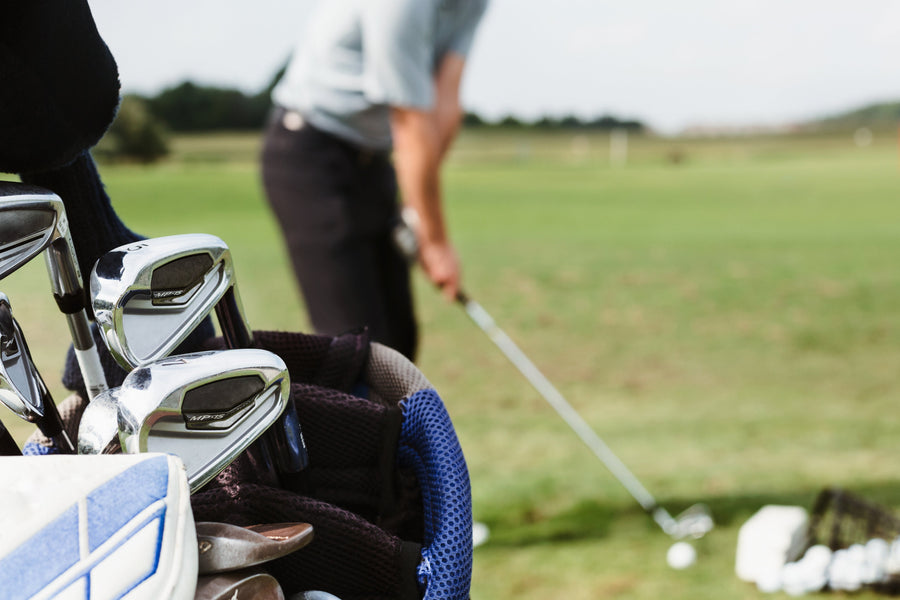
Introduction: Golf Swing Tips + Practice Gear to Improve Golf Performance
Picture this: you're standing on the first tee, gripping your driver with confidence, knowing that your swing has the consistency and power to send that ball exactly where you want it. That's what improved golf performance looks like – and it's absolutely achievable with the right combination of fundamental golf swing tips and strategically chosen practice gear.
Define "improve golf performance" (consistency, distance, accuracy, scoring)
When we talk about improving golf performance, we're targeting four critical pillars that transform your game. Consistency means repeating quality swings under pressure, eliminating those frustrating blow-up holes that derail your scorecard. Distance isn't just about bombing drives – it's about optimizing your power-to-control ratio across every club in your bag.
Accuracy encompasses both directional control and proximity to targets, whether you're splitting fairways or attacking pins. Ultimately, scoring improvement ties everything together – lower handicaps, better tournament finishes, and those bragging rights you've been chasing at your home course.
Set expectations: people-first fundamentals, smart use of golf swing training aids
Here's the truth that separates weekend warriors from scratch golfers: golf swing training aids are amplifiers, not magic wands. The most sophisticated practice gear won't fix fundamentally flawed mechanics or compensate for poor understanding of swing principles.
This approach prioritizes human movement patterns first, then leverages technology and training tools to accelerate learning and reinforce proper positions. Think of golf practice gear as your personal swing coach – providing instant feedback, constraining movement into better patterns, and creating muscle memory that transfers to the course.
Who benefits most from golf practice gear (beginner, mid-handicap, competitive)
Beginners gain tremendous value from training aids that establish proper fundamentals from day one, preventing the costly process of unlearning bad habits later. Mid-handicap players – typically shooting in the 80s and 90s – often see the most dramatic improvements because they already possess basic swing competency but need refinement in specific areas.
Competitive golfers use golf swing training aids for maintenance and fine-tuning, often focusing on speed development, pressure training, and shot-shaping precision. The key is matching your current skill level with appropriate tools rather than purchasing every gadget that promises instant improvement.
Assess Your Baseline Before Buying Training Aids
Before investing a single dollar in golf practice gear, you need to establish where you currently stand. Think of this as your swing's diagnostic report – without accurate baseline data, you're essentially throwing darts in the dark, hoping random training aids will magically solve unidentified problems.
Quick self-audit: ball flight, contact pattern, start line, curvature, tempo
Start your assessment by observing ball flight patterns during your next range session. Document whether your shots typically start left, right, or straight relative to your target line. Notice the predominant curvature – are you fighting a persistent slice, battling hooks, or dealing with inconsistent shot shapes?
Contact quality reveals itself through impact sensations and divot patterns. Solid strikes produce a distinctive "click" and forward-pointing divots, while fat or thin contact creates jarring feedback and erratic turf interaction. Pay attention to your natural tempo – many golfers rush the transition from backswing to downswing, creating timing issues that no amount of practice gear can fix without conscious correction.
Simple metrics to track: dispersion, FIR/GIR, up-and-downs, proximity
Dispersion measurement transforms vague feelings into concrete data. Hit ten shots with your 7-iron, then measure the widest spread between your best and worst shots. Elite players typically achieve 15-20 yard dispersions, while recreational golfers often scatter shots across 40+ yards.
"Data doesn't lie, but feelings often deceive. Track fairways hit, greens in regulation, and up-and-down percentages to identify which areas of your game need the most attention."
Proximity to target matters more than distance for scoring. A consistent 150-yard approach shot that lands within 30 feet beats an inconsistent 165-yard shot that varies by 50 feet. These baseline measurements guide your golf swing training aids selection process.
Identify root causes behind common misses to match the right tool
Most golfers treat symptoms rather than causes. That persistent slice might stem from an overly strong grip, an over-the-top swing path, or an open clubface at impact – each requiring different corrective approaches and training aids.
Topped shots could indicate poor posture, excessive head movement, or improper weight transfer. Fat strikes often result from early release, reverse weight shift, or ball position errors. Understanding these root causes prevents you from purchasing ineffective golf practice gear that addresses secondary issues while ignoring primary swing flaws.
For golfers seeking comprehensive training solutions, Inside the Leather Golf's curated collection of golf training aids offers scientifically-backed tools designed to address specific swing deficiencies. Rather than overwhelming you with countless options, this collection focuses on proven training aids that deliver measurable results for dedicated practitioners.
The beauty of proper assessment lies in its ability to create targeted improvement plans. Once you've identified your primary swing issues, you can select specific golf swing training aids that directly address those problems, maximizing your practice efficiency and accelerating skill development.
Core Golf Swing Tips That Move the Needle
These fundamental golf swing tips form the bedrock of consistent performance. Master these elements, and every training aid becomes exponentially more effective. Ignore them, and even the most sophisticated golf practice gear becomes an expensive paperweight.
Grip, posture, and alignment checkpoints that stabilize the clubface
Your grip represents the only connection between your body and the golf club, making it the most critical fundamental to master. Position your lead hand so the "V" formed by your thumb and index finger points toward your trailing shoulder. The trailing hand should complement this position, with the lifeline resting against the lead thumb.
Posture creates the foundation for consistent swing planes. Stand tall, then hinge forward from your hips while maintaining a straight spine. Your arms should hang naturally, creating approximately 20 degrees of forward tilt. This athletic position enables rotational power while maintaining balance throughout the swing sequence.
Alignment encompasses more than simply aiming at your target. Your feet, hips, and shoulders should establish parallel lines that point slightly left of your intended ball flight for right-handed golfers. This setup accounts for the natural inside-out swing path that produces optimal ball striking.
Club path and swing plane: how to create repeatable geometry
The swing plane represents an imaginary surface that your club should travel along during the swing. For most golfers, this plane sits at approximately 60-70 degrees relative to the ground, varying based on club length and individual body measurements.
Club path refers to the direction your clubhead travels through impact relative to your target line. Optimal path typically approaches the ball from 2-4 degrees inside the target line, creating the preferred inside-out delivery that maximizes distance and accuracy. Excessive outside-in paths produce slices and pulls, while overly inside-out approaches generate hooks and pushes.
The revolutionary TRS Slider training aid transforms swing plane development from guesswork into precise muscle memory. This innovative device guides your club along the optimal plane while providing instant feedback when you deviate from proper positions. Unlike static alignment aids, the TRS Slider promotes dynamic movement patterns that directly transfer to your actual swing.
Tempo and sequencing (3:1 backswing-to-downswing) to coordinate power
Professional golfers consistently maintain a 3:1 tempo ratio – their backswing takes three times longer than their downswing. This timing creates the sequential activation of body segments that generates maximum clubhead speed at impact. Rushing the backswing or slowing the downswing disrupts this kinetic chain, resulting in inconsistent contact and reduced distance.
Proper sequencing begins from the ground up during the downswing. Your lower body initiates the movement, followed by torso rotation, then arm acceleration, and finally clubhead release. This sequence creates a whip-like effect that multiplies the force generated by each body segment.
Impact and low-point control for solid contact and distance control
Impact position determines ball flight more than any other swing element. At impact, your hands should be slightly ahead of the ball, creating a descending blow that compresses the ball against the turf. Your weight should favor your lead foot, and your hips should be partially rotated toward the target.
Low-point control – where your club bottoms out relative to the ball – separates consistent ball strikers from erratic players. For iron shots, the low point should occur 2-4 inches past the ball, ensuring ball-first contact and proper trajectory. Drivers require a slightly ascending blow, with the low point occurring before ball contact.
Choosing Golf Practice Gear and Swing Training Aids for Your Goal
The golf training aid market overflows with gadgets promising miraculous improvement, but discerning golfers understand that targeted selection beats random accumulation. Your specific swing deficiencies should dictate your equipment choices, not marketing hyperbole or professional endorsements.
Path/plane tools: alignment sticks, swing plane trainers, mirrors
Alignment sticks represent the most versatile and cost-effective golf swing training aids available. Position them parallel to your target line to establish proper setup geometry, or angle them to create swing plane guides that promote consistent club positioning. Advanced practitioners use multiple sticks to create "gates" that constrain swing path and encourage proper sequencing.
Swing plane trainers like hinged guides or molded plane boards provide tactile feedback when your club deviates from optimal positions. These tools excel at ingraining muscle memory for golfers struggling with over-the-top moves or excessively flat swing planes.
Full-length mirrors transform practice sessions into instant feedback laboratories. Position yourself perpendicular to the mirror to monitor swing plane and posture, or face the mirror to check alignment and setup positions. The immediate visual feedback accelerates learning more effectively than verbal instruction alone.
Face control and grip aids: molded-grip clubs, face tape, impact labels
Clubface orientation at impact determines 75-85% of initial ball direction, making face control the highest priority for accuracy improvement. Molded-grip training clubs feature built-in hand positions that promote neutral clubface alignment throughout the swing sequence.
| Training Aid Type | Primary Benefit | Best For |
|---|---|---|
| Face Tape | Impact Pattern Feedback | Contact Quality Issues |
| Impact Labels | Strike Location Awareness | Off-Center Hits |
| Molded Grips | Hand Position Consistency | Grip Pressure Problems |
Impact labels and face tape provide immediate feedback about strike patterns, revealing whether you're making center-face contact or consistently missing toward the heel, toe, or perimeter areas. This data guides equipment fitting decisions and swing adjustments.
Speed and sequencing: speed sticks, weighted clubs, resistance bands
Speed training has revolutionized modern golf instruction, with systematic overspeed and underspeed protocols producing measurable distance gains. Speed sticks of varying weights train your neuromuscular system to generate higher clubhead speeds while maintaining control and timing.
Weighted clubs and resistance bands develop the specific strength patterns required for powerful, efficient swings. Light weights promote speed development, while heavy weights build the stability and control necessary to harness that speed effectively.
Contact and low-point: strike board, impact bag, foot spray on the face
Strike boards with painted or marked surfaces reveal divot patterns and contact quality instantly. Proper iron strikes create divots that begin at ball position and extend 2-4 inches toward the target, indicating descending blow and appropriate low-point control.
Impact bags provide resistance training while promoting proper body positions at impact. The feedback helps golfers feel correct weight distribution, hip rotation, and hand position without the distraction of ball flight results.
Net, mat, and launch monitor basics for effective at-home practice
Quality practice nets enable year-round training regardless of weather or facility access. Look for nets with adequate depth and width to contain mishits, plus easy setup and breakdown capabilities for regular use.
Practice mats should simulate real turf conditions while protecting your clubs from damage. Premium mats offer realistic feedback for both fat and thin strikes, helping you develop proper contact patterns that transfer to course conditions.
Launch monitors have become increasingly affordable and accurate, providing essential data like ball speed, launch angle, and spin rates. This objective feedback eliminates guesswork and enables data-driven improvement strategies.
How to Use Golf Swing Training Aids Effectively
Owning golf swing training aids is meaningless without proper implementation strategies. The difference between golfers who achieve breakthrough improvements and those who accumulate expensive garage decorations lies in systematic, purposeful practice protocols.
Drill design: constraints that guide motion without overthinking
Effective training aids work by constraining movement into better patterns rather than demanding conscious control of multiple swing elements. The best golf practice gear creates environmental conditions that naturally promote correct positions, allowing your body to discover proper sensations organically.
For example, placing an alignment stick along your swing plane forces you to stay on path without mentally processing complex geometric relationships. Your nervous system automatically adapts to avoid contact with the constraint, ingraining muscle memory through repetitive correct movement patterns.
Avoid training aids that require excessive mental processing during swing execution. Golf swing training aids should simplify the learning process, not complicate it with additional technical thoughts that destroy natural athletic motion.
Blocked-to-random progression: engrain, then test without the aid
Motor learning research demonstrates that blocked practice – repetitive execution under identical conditions – builds initial skill patterns, while random practice – varying conditions and challenges – develops transfer and retention.
Begin each training session with blocked practice using your chosen golf swing training aids. Execute 10-15 repetitions focusing purely on movement quality and feedback from the training device. This phase ingrains the correct neuromuscular patterns without distraction.
Progress to random practice by removing the training aid and attempting to replicate the same sensations and positions. This transition phase reveals whether you've internalized the movement pattern or simply become dependent on external constraints.
Sample 20-minute home routine (mirror + alignment sticks + impact bag)
Efficient practice maximizes improvement per minute invested. This streamlined routine addresses multiple swing elements systematically:
- Minutes 1-3: Setup and posture check using full-length mirror
- Minutes 4-8: Slow-motion swings with alignment stick plane guide
- Minutes 9-14: Impact bag work focusing on body positions and sequencing
- Minutes 15-17: Mirror work integrating all elements at normal speed
- Minutes 18-20: Shadow swings without aids to test retention
This progression builds from static positions to dynamic movement, ensuring each element integrates smoothly with the others. The final shadow swings reveal whether you've developed genuine improvement or temporary aid dependency.
Range session flow: warm-up, drill block, transfer reps, play-like reps
Transform range sessions from mindless ball beating into structured improvement laboratories. Begin with dynamic warm-up swings that prepare your body for athletic movement without the pressure of ball striking performance.
Dedicate the first third of your session to drill work using golf practice gear. Focus on quality over quantity – 20 perfect repetitions trump 100 sloppy attempts. The training aids should guide you toward better movement patterns while providing immediate feedback.
Transition to transfer repetitions where you attempt to replicate drill sensations while actually striking balls. Start with shorter irons and easier targets, gradually progressing to longer clubs and more challenging shots as confidence builds.
Conclude with play-like repetitions that simulate on-course conditions. Use different targets, vary your routine timing, and create pressure situations that test your ability to execute under stress. This final phase determines whether your practice improvements will translate to lower scores.
Targeted Golf Swing Tips for Common Misses
Every golfer battles specific shot patterns that undermine scoring potential and mental confidence. These targeted corrections, combined with appropriate golf swing training aids, address the root causes behind your most frustrating misses rather than applying band-aid solutions.
Slice correction: face-to-path awareness, gate drills, trail-arm connection
The slice plague affects roughly 80% of recreational golfers, stemming from an open clubface relative to swing path at impact. Most slicers swing over-the-top with an outside-in path, but the primary culprit remains clubface orientation – not swing direction.
Develop face-to-path awareness by practicing with impact tape that reveals strike patterns. A slice typically shows heel-side contact, indicating the clubface is rotating open through impact. Focus on strengthening your grip position and maintaining clubface stability through the hitting zone.
Gate drills using alignment sticks create physical constraints that promote inside-out swing paths. Position sticks to form a narrow corridor that your club must navigate, naturally encouraging the proper approach angle that reduces slice spin.
Trail-arm connection exercises help maintain proper clubface control. Keep a glove or towel tucked under your trailing armpit during practice swings – this connection promotes the proper arm and body relationship that stabilizes clubface position.
Hook management: neutralize grip, face tape feedback, tempo governor
Hooks result from a closed clubface relative to swing path, often accompanied by excessive inside-out club delivery. While hooks demonstrate good swing fundamentals, uncontrolled hooks destroy accuracy and create course management nightmares.
Neutralize your grip by ensuring both hands work together rather than fighting each other. The "V's" formed by your thumbs and index fingers should point toward your trailing shoulder, preventing excessive hand rotation through impact.
Face tape feedback reveals toe-side contact patterns common with hooks. This impact location indicates early clubface closure and excessive hand action through the hitting zone. Practice maintaining clubface square longer through impact to achieve center-face strikes.
Tempo governors like weighted clubs or metronomes help control the aggressive transitions that often trigger hooks. Smoother tempo reduces the timing errors that cause premature clubface closure.
Fat/thin strikes: low-point line drill, towel-behind-ball spacing
Inconsistent contact – alternating between fat and thin strikes – indicates poor low-point control. Your club should bottom out at a consistent location relative to ball position, creating predictable trajectory and distance outcomes.
Low-point line drills using spray paint or chalk help visualize proper divot patterns. Draw a line perpendicular to your target line at ball position, then practice creating divots that begin at the line and extend 2-4 inches toward the target.
Towel-behind-ball spacing creates instant feedback for fat strikes. Place a towel 6 inches behind your ball – fat contact will move the towel, while proper strikes leave it undisturbed. This drill develops the descending blow required for solid iron contact.
Over-the-top fix: step-change drill, pump-with-plane-hoop progression
The over-the-top move – where the club approaches from outside the target line – represents one of golf's most destructive swing flaws. This pattern produces slices, pulls, and inconsistent contact while robbing distance and accuracy.
Step-change drills interrupt the over-the-top sequence by forcing proper lower-body initiation. Take your normal backswing, then step toward the target with your lead foot before beginning the downswing. This movement naturally drops the club into the proper inside approach.
Pump-with-plane-hoop progressions use circular guides to constrain club movement. Make partial backswings, then "pump" the club through the proper downswing plane several times before executing full swings. This repetition ingrains the correct approach angle through muscle memory.
Practice Plans by Skill Level
Cookie-cutter practice approaches fail because golfers at different skill levels require fundamentally different development strategies. Your handicap level should dictate both the complexity of golf swing training aids you employ and the sophistication of practice protocols you follow.
Beginner: build setup and solid contact with minimal gear
Beginners benefit most from simplified approaches that establish proper fundamentals without overwhelming technical complexity. Focus on grip, posture, and ball-striking consistency before introducing advanced golf practice gear or complicated swing theories.
Essential beginner equipment includes alignment sticks for setup consistency, impact tape for contact feedback, and a basic practice net for volume repetitions. Avoid sophisticated training aids that provide too much information – your nervous system needs time to process basic movement patterns first.
Practice sessions should emphasize quality over quantity, with 30-45 minutes being optimal for maintaining concentration. Spend equal time on setup fundamentals and actual ball striking, using simple targets and achievable goals that build confidence alongside skill development.
Intermediate: path/face pairing and dispersion control with feedback tools
Mid-handicap golfers possess basic swing competency but need refinement in shot consistency and distance control. This skill level benefits tremendously from golf swing training aids that provide detailed feedback about clubface and swing path relationships.
Recommended intermediate tools include swing plane trainers, clubface impact stickers, and basic launch monitors that reveal ball flight data. These devices help you understand the cause-and-effect relationships between swing changes and ball flight outcomes.
Practice emphasis should shift toward dispersion control and shot shaping. Work with specific targets at various distances, tracking your ability to consistently land balls within defined zones. This approach bridges the gap between mechanical improvement and practical scoring ability.
Advanced: speed windows, shot shaping, performance practice under pressure
Low-handicap golfers require sophisticated golf practice gear that challenges existing skills while developing tournament-level performance capabilities. Speed training, precision work, and pressure simulation become primary development focuses.
Advanced equipment includes speed-training systems, precise launch monitors, and variable-resistance training aids. These tools help optimize the final percentages of performance that separate good golfers from exceptional ones.
Practice sessions should simulate competitive conditions with scoring systems, time pressure, and consequence-based scenarios. Advanced players need to maintain their technical skills while developing the mental resilience required for peak performance under stress.
Measure What Matters to Confirm Improvement
Without objective measurement, golf improvement becomes an exercise in wishful thinking rather than systematic development. The most sophisticated golf swing training aids provide worthless feedback unless you're tracking the right metrics and interpreting data correctly.
At-home data: swing speed radar, face strike map, start-line checkpoints
Modern technology transforms home practice from guesswork into precision training. Swing speed radar units provide immediate feedback about clubhead velocity changes, helping you understand whether technical modifications enhance or diminish your power generation capabilities.
Face strike mapping using impact stickers or spray reveals contact consistency patterns that directly correlate with distance control and accuracy. Center-face contact produces optimal energy transfer, while heel or toe strikes create unpredictable ball flights that undermine course performance.
Start-line checkpoints using alignment aids help you monitor directional control improvements. Set up gates or markers at various distances to track whether your shots begin on intended lines, regardless of final curvature. This metric separates swing path issues from clubface problems.
On-course KPIs: scoring average, FIR/GIR, proximity, three-putt rate
Course performance metrics reveal whether practice improvements translate into lower scores and better competitive results. Track these key performance indicators consistently to identify trends and validate training effectiveness.
- Scoring Average: The ultimate measure of golf performance improvement
- Fairways in Regulation (FIR): Indicates driving accuracy and course management
- Greens in Regulation (GIR): Measures approach shot consistency and iron play
- Proximity to Pin: Reveals precision improvements in approach shots
- Three-Putt Rate: Identifies short game and green reading development
These statistics provide objective feedback about which areas of your game respond best to specific golf practice gear and training protocols. Focus your practice time on the metrics that show the least improvement relative to scoring impact.
Iterate drills and gear choices based on objective trends
Data-driven improvement requires continuous refinement of training approaches based on measurable results. If your golf swing training aids aren't producing statistical improvements within 4-6 weeks, reassess your equipment selection and practice protocols.
Successful iteration involves changing one variable at a time while maintaining consistent measurement standards. This scientific approach prevents confusion about which modifications produce positive results versus those that waste time and energy.
Monthly performance reviews should compare current metrics against baseline measurements, identifying areas of progress and persistent weaknesses. Use this analysis to guide future golf practice gear purchases and practice session priorities.
Safety, Fit, and Maintenance of Golf Practice Gear
Investing in quality golf practice gear represents a significant financial commitment that deserves protection through proper care and maintenance protocols. Additionally, improper use of golf swing training aids can lead to injury or equipment damage that undermines your improvement goals.
Space and safety checks for home nets, mats, and weighted clubs
Home practice spaces require careful assessment before introducing high-velocity training equipment. Ensure adequate clearance in all directions – minimum 10 feet behind, 8 feet to each side, and 9 feet overhead for full swing practice with standard clubs.
Weighted training clubs demand additional safety considerations due to increased momentum and altered balance characteristics. Start with lighter weights and shorter swings, gradually progressing to full movements as your body adapts to the modified feel and timing requirements.
Practice nets should be properly anchored to prevent tip-over during use, with sufficient depth to absorb errant shots without rebounding toward the hitting area. Regular inspection of net integrity prevents dangerous situations where damaged sections fail under impact.
Fit and adjustability: shaft length, grip size, resistance levels
Proper fit extends beyond golf clubs to include all golf swing training aids that interface with your body mechanics. Training aids with incorrect specifications can ingrain poor movement patterns or create physical discomfort that limits practice effectiveness.
Shaft length in training clubs should match your standard equipment to maintain consistent posture and swing plane relationships. Significant length variations alter setup positions and timing, potentially creating confusion when transferring skills to actual play.
Resistance levels in speed training systems or weighted clubs require gradual progression based on individual strength and swing speed capabilities. Excessive resistance overwhelms technique, while insufficient resistance fails to provide adequate training stimulus.
Maintenance: wear indicators on mats/nets;safe storage and travel tips
Quality practice mats exhibit specific wear patterns that indicate replacement timing. Excessive thinning, fiber loss, or backing separation compromises feedback quality and can damage club faces through inadequate cushioning.
Practice nets require regular inspection of corner stress points, guy-line tension, and impact zone integrity. UV exposure degrades nylon fibers over time, particularly in outdoor installations that experience direct sunlight exposure.
Storage protocols for golf swing training aids should protect against temperature extremes, moisture damage, and physical distortion. Weighted clubs benefit from vertical storage to prevent shaft bending, while mirrors and alignment aids require padding to prevent scratching or cracking during transport.
From Practice Bay to Course Day: Transfer Under Pressure
The ultimate test of any golf practice gear lies not in perfect range performance, but in its ability to improve your scores when stakes are highest. Many golfers excel with golf swing training aids during isolated practice sessions, only to revert to old patterns when facing course pressure and consequences.
Build a pre-shot routine that carries new feels onto the course
Your pre-shot routine serves as the bridge between practice improvements and course execution. Develop specific trigger movements or mental cues that recreate the sensations learned through golf swing training aids without requiring the actual equipment.
For example, if alignment sticks help you achieve proper setup geometry, create a routine that includes visual alignment checks and body position adjustments that replicate the same positioning. This mental rehearsal activates the neural patterns developed during training aid practice.
Practice your routine extensively on the range before taking it to the course. The movements should feel automatic and require minimal conscious thought, allowing you to focus on target selection and shot execution rather than technical mechanics.
Constraints-led on-course games (fairway-only, one-ball practice)
Create artificial constraints during practice rounds that simulate the decision-making pressure of competitive golf. Fairway-only rules force conservative shot selection and accurate execution, while one-ball practice eliminates the safety net of multiple attempts.
These constraints reveal whether your golf swing training aids have developed genuine skill improvement or merely created dependency on perfect conditions. Course games bridge the gap between controlled practice environments and unpredictable competitive situations.
Progressive constraint games build confidence systematically. Start with generous fairway targets and comfortable distances, gradually increasing difficulty as your transfer skills improve. This approach prevents overwhelming pressure that causes regression to old patterns.
Taper aid use before events to avoid dependency and sharpen trust
Reduce reliance on golf practice gear in the weeks preceding important competitions or tournaments. This tapering period allows your nervous system to internalize movement patterns while building confidence in your natural swing capabilities.
Excessive training aid use immediately before competition can create doubt and mechanical thinking that undermines instinctive play. Your goal should be developing swing improvements that function independently of external support systems.
The final week before significant events should eliminate all golf swing training aids except for basic warm-up and alignment tools. This approach ensures your competitive mindset focuses on target and strategy rather than technique and mechanics.
FAQs: Golf Swing Tips, Practice Gear, and Training Aids
These frequently asked questions address the most common concerns golfers have when investing in golf practice gear and implementing systematic improvement strategies. Understanding these principles prevents costly mistakes and accelerates your development timeline.
How long should a training aid be used per session to avoid fatigue or dependency?
Optimal training aid usage typically ranges from 10-15 minutes per session for most golf swing training aids. Longer sessions risk fatigue that degrades movement quality, while excessive dependency develops when aids become crutches rather than learning accelerators.
The key lies in transitioning from aided practice to unaided execution within each session. Spend your initial repetitions with the training aid establishing proper feel and feedback, then remove the aid for the final third of your practice to test retention and transfer.
Can golf swing training aids ingrain bad habits if used incorrectly?
Absolutely. Improper use of golf practice gear can reinforce flawed movement patterns or create artificial swing positions that don't translate to actual golf shots. This risk emphasizes the importance of understanding the intended purpose and proper application of each training device.
Always verify that your training aid usage aligns with sound swing principles rather than chasing quick fixes or miracle cures. When in doubt, consult with a qualified instructor who can guide appropriate selection and implementation of specific golf swing training aids for your needs.
Are lessons or golf practice gear a better first investment for most golfers?
Professional instruction should typically precede significant golf practice gear investments, especially for beginners and high-handicap players. Quality lessons establish proper fundamentals and identify specific areas needing improvement, enabling more targeted training aid selection.
However, basic golf swing training aids like alignment sticks, impact tape, and practice mirrors complement lessons effectively and provide ongoing feedback between instruction sessions. The ideal approach combines periodic professional guidance with consistent self-practice using appropriate training tools.
What's a budget-friendly setup for small spaces or apartments?
A comprehensive small-space practice setup can be assembled for under $200 and requires minimal storage. Essential items include alignment sticks ($20), impact tape ($15), a practice mirror ($40), resistance bands ($25), and a foam practice ball set ($30) for safe indoor work.
This basic kit addresses grip, posture, alignment, swing plane, and impact quality without requiring dedicated practice space or expensive installations. Add a collapsible practice net ($60) if ceiling height permits, enabling actual ball striking in confined areas.
How quickly should improved golf performance show up in scores?
Realistic expectations suggest 4-6 weeks for noticeable ball striking improvements and 8-12 weeks for measurable scoring changes when using golf swing training aids consistently. Technical improvements often appear before scoring benefits, as course management and short game skills also influence final results.
Individual timelines vary significantly based on current skill level, practice frequency, and quality of implementation. Beginners often see faster initial improvements, while advanced players require longer periods to achieve meaningful changes in already-developed swing patterns.
Do speed trainers risk injury, and who should avoid them?
Speed training systems present minimal injury risk when used properly with appropriate progression protocols. However, golfers with existing back, shoulder, or wrist injuries should consult medical professionals before beginning aggressive speed development programs.
Start with lighter weights and shorter sessions, gradually increasing intensity as your body adapts to the training demands. Proper warm-up becomes especially critical when using speed-focused golf practice gear that places additional stress on swing muscles and joints.
Conclusion: A Balanced Plan to Improve Golf Performance
The journey to improved golf performance demands more than wishful thinking or random equipment purchases. Success requires a systematic approach that combines fundamental golf swing tips with strategically selected golf practice gear, all measured through objective performance tracking.
Recap: fundamentals + targeted golf swing training aids + measurable practice
Your improvement foundation rests on three pillars that work synergistically to create lasting change. Solid fundamentals – grip, posture, alignment, and swing mechanics – provide the bedrock upon which all other improvements build. Without these basics, even the most sophisticated golf swing training aids become expensive distractions.
Targeted golf practice gear amplifies your natural learning process by providing immediate feedback and constraining movement into better patterns. The key word is "targeted" – each training aid should address specific deficiencies identified through honest self-assessment and objective measurement.
Measurable practice transforms hope into certainty by providing concrete evidence of improvement. Track swing speed, contact patterns, dispersion, and on-course statistics to validate that your investment in golf swing training aids produces tangible results rather than temporary feelings of progress.
Next steps: choose one primary goal, one aid, and one drill for two weeks
Overwhelming yourself with multiple improvement projects simultaneously guarantees mediocre results across all areas. Instead, identify your single most limiting factor – whether it's contact consistency, directional control, or distance limitations – and focus intensively on that element.
Select one piece of golf practice gear that directly addresses your chosen improvement area. Commit to using this training aid consistently for two weeks, following proper implementation protocols and tracking relevant metrics throughout the period.
Design one specific drill that integrates your chosen training aid with actual ball striking practice. This drill should follow the blocked-to-random progression outlined earlier, beginning with aid-supported repetitions and progressing to unaided execution.
Sustain progress: review data monthly and refine the practice plan
Sustainable improvement requires periodic assessment and course corrections based on objective performance data. Schedule monthly reviews that compare current metrics against baseline measurements, celebrating progress while identifying persistent weaknesses.
Refine your practice plan based on these monthly reviews, adjusting golf swing training aids selection and practice protocols to address areas showing insufficient improvement. This iterative approach ensures your development continues progressing rather than plateauing.
Remember that golf improvement follows a non-linear path with periods of rapid progress alternating with apparent stagnation. Trust the process, maintain consistency with proven golf practice gear and techniques, and allow sufficient time for lasting changes to integrate into your competitive performance.
Your golf journey deserves the support of quality equipment and systematic improvement strategies. With the right combination of fundamental knowledge, targeted training aids, and measurable practice protocols, the consistent performance you've been seeking becomes an achievable reality rather than an elusive dream.